
Adaptogens: Building Resilience, Not Just Burning Up Your Fuel
What Adaptogens Are, and What They Aren't
“Adaptogens are remarkable natural substances that help the body adapt to stress, support normal metabolic function, and help restore systemic equilibrium. In the most simplistic terms, adaptogens are relatively nontoxic, produce a nonspecific defensive response to stress, and have a normalizing influence on the body.” from Adaptogens, Herbs for Strength, Stamina and Stress Relief by David Winston RH (AHG)
Adaptogens help us adapt to stress and the everyday challenges of life. If we are wound up, they can help us calm down. If we are feeling low, they can lift us. Whether the stress is mental, physical, or emotional, adaptogens and adaptogenic practices help fortify and support us.
Though the Chinese have known many of these herbs for thousands of years, the official categorizing of adaptogens began with Siberian ginseng, explored to give Russian Olympic athletes extra speed and stamina. Today the list includes herbs, supplements, practices, and foods that help us become more resilient and protect against burnout.
A key distinction is that an adaptogen is meant to be more than a stimulant. Trading your coffee for yerba mate or green tea isn't the idea, since they all contain caffeine. Stimulants and these herbs can be combined deliciously, but it’s best done intentionally and carefully, especially if you are already running on empty. I often tell my patients, "I'm not interested in giving you more rocket fuel if you are misusing the energy, vitality, and Qi that you have." We don't want to burn you out faster. We want to help you build resilience, preferably with calm and clarity.
Stimulants tend to push us past our cue to rest. These adaptogenic herbs can help us rest more effectively. Some make you feel sleepy, and others are soft and subtle, but over time you may notice things feel easier and lighter. Quick fixes carry a cost: short-term dopamine raises our need for ever-increasing and stronger signals for a reaction (doom scrolling, anyone?). Stimulants can also bring tolerance, abuse potential, poor sleep structure, and a rebound "come down." Adaptogens are generally well tolerated and, by their very nature, meant to build our reserves rather than deplete them. A 2005 review of Rhodiola, schisandra, and Eleuthero (include link) found that even single doses can increase mental performance and physical working capacity in humans. Adaptogens help us build up our reserves and preserve our energy. They can optimize cortisol receptors, so that the body can respond appropriately to lower amounts of cortisol and stress hormones. They can help recharge the adrenal glands, to improve endurance. They can support recovery from stressors and extreme experiences, with more resolve, greater resilience and help to preserve the body’s tissues so that repair is easier and our return to balance and homeostasis is quicker and more easeful.

The Herbs, A to Z
My favorite adaptogens are very gentle and generally carry a low risk of harm. Please read the contraindications section below before trying any of them and consult your health care practitioner with any questions.
Ashwagandha: An Indian adaptogen that can enhance sleep, provide calm, and increase endurance. It is generally enjoyed as a tea, tincture, or dried herb in capsules. From her book Herbal Wisdom from the Heart of the Earth by Sharon Tilgner, “In India, ashwaganda is thought to instill the vitality of a horse.” This herb is great for nervous exhaustion, stress induced health conditions and can be used to improve white cell counts after exposure to cytotoxic chemicals or drugs. It has also been found to improve macrophage activity, a key actor in our immune system. (link here)
Eleutherococcus (Siberian ginseng): Eleutherococcus senticosus has been used as traditional medicine for about 2,000 years, and it is how the adaptogen category got its name. The original studies (which I don't condone) were in mice, and the mice given the root were able to swim significantly longer. Rumor has it that in the 1950s and '60s, Russian athletes were given it to help them win Olympic gold. It has shown benefit for cognitive function and for physical and mental endurance. Per Sharol Tilgner (Herbal Medicine from the Heart of the Earth), it can "increase endurance, enhance oxygen metabolism and enhance overall resistance to disease."
People turn to Eleuthero for less tiredness and stress, and it can help to lower blood sugar. It is an immunomodulator that may stimulate or calm the immune system depending on what your body needs, thanks to its anti-inflammatory and immunomodulatory effects. It may also be neuroprotective, studies have shown it raises brain-derived neurotrophic factor (BDNF), a chemical that helps brain cells grow and stay healthy. That may help explain its effects on stress, fatigue, and memory.
Holy basil (tulsi): From David Winston: a mild adaptogen with antioxidant, neuroprotective, stress-reducing, and radioprotective properties. In studies, holy basil prevented increased cortisol levels in mice exposed to noise stress. It can help reduce blood sugar, prevent gastric ulcers, inhibit allergy symptoms, re-regulate an excessive immune response, and inhibit histamine release. It may relieve mental fog, improve cognitive function, reduce error rates, and improve reaction time. Daily use is said to promote wellbeing and longevity, and it is credited with giving luster to the complexion, sweetness to the voice, and a calm emotional disposition.
Lavender: Not generally considered an adaptogen, but it plays such an important part in my own ability to adapt that I include it here. Whether as a tea, tincture, sachet of dried herb, or simply the scent of the essential oil (or brushing my hands over the plants in my yard), lavender can uplift us when we're down and mellow us when we're overwhelmed. It is a soft, gentle nervine, or tonic to the nerves, with antidepressant qualities, plus antimicrobial and tissue-healing properties. Historically it was used in childbirth. Lavender tea or the essential oil can help us fall asleep faster and sleep more restfully, which is itself a vital part of healthy adaptation and recovery. It has few contraindications and is considered safe for children, elders, and everyone in between.
Maca: Native to the Peruvian Andes, maca is reputed to help Peruvians adapt to altitude and endurance, and it is a favorite of mine for peri- and postmenopausal support. It supports the hypothalamic-pituitary axis to help modulate hormone balance, which may ease menopausal symptoms and mood fluctuations, including the erratic swings common in perimenopause. In one study, perimenopausal women taking Femmenessence® MacaLife® reported statistically significant improvements in mood, emotional wellbeing, and vitality compared with placebo, along with clearer thinking and better sleep. Men in studies of sexual health reported more desire, better erections, and improved wellbeing. Maca is traditionally valued as an aphrodisiac, and early research suggests promise for fertility, fatigue, heart health, blood pressure, digestion, liver protection, muscle growth, and physical performance.
Panax Ginseng: Used over thousands of years in herbal medicine, panax ginseng is known to improve resilience, strengthen the immune system and reduce fatigue. Modern research has shown its capacity to support balance of the HPA axis (hypothalamic- pituitary-axis) where it assists in modulating the response to stress, both lowering the impacts of stress harm on the body and increasing sensitivity of the adrenal cortex. Panax, also known as Korean Ginseng promotes longevity and growth of normal cells, can help enhance insulin sensitivity aiding in better blood sugar balance. It is often touted as a longevity tonic and the older the root at the time of harvest, the more potent its health benefits. Some studies have shown Panax ginseng to reduce cellular markers of aging. Studies have shown it may help reduce the carcinogenic impacts of toxic chemicals and help the immune system more efficiently fight infections.
Reishi: Another favorite adaptogen, and a gentle, non-stimulating one. It is a steady daily friend that generally agrees with most people, and its benefits are best enjoyed with regular use. Reishi can reduce fatigue, help balance blood sugar, and support heart health. It is also an immune amphoteric: it supports an appropriate immune response when it has been subdued, and it helps calm one that has been prolonged, as in autoimmunity or allergies. It helps the body return to "rest and digest" by calming the sympathetic nervous system, and it may improve adrenocortical function and the stress response. Several studies suggest reishi shortens the time it takes to fall asleep and improves sleep quality. Despite these calming properties, it isn't known to cause drowsiness, and some studies show it supports healthy energy levels.
Rhodiola: From David Winston: antidepressant, antioxidant, antiviral, cardioprotective, anti-arrhythmic, a mild central nervous system stimulant, and a nervous system tonic. It can enhance alertness, reduce fatigue, and improve memory. It may protect against chemical and radiation damage, enhance reproductive function, prevent stress-induced heart damage, and improve the strength of the heart muscle. (I love the Herb Pharm tincture, which has a lovely rose aftertaste when taken in drop doses.)
Schisandra: A calming adaptogen known in Chinese medicine as Wu Wei Zi, the "five-flavor herb," a balancing tonic containing sweet, salty, sour, bitter, and pungent. Its astringent effect is said to help conserve Jing, or essence. It can help with stress-induced heart palpitations and deficiency insomnia, which may include restlessness and bad dreams. It has a dual effect on the nervous system, enhancing reflexes and mental clarity while also bringing calm and reducing anxiety. It also has a balancing effect on blood pressure, lowering mildly high readings and raising low-normal ones toward normal.
Shilajit: Unlike plant-based adaptogens, shilajit is a rare mineral pitch that oozes from rocks in high-altitude ranges like the Himalayas. It contains organic compounds and minerals, primarily fulvic acid, which helps carry minerals and nutrients across cell membranes. It supports cellular energy and vitality, and it may help restore mineral stores to aid recovery from prolonged stress. Fulvic acid is a natural chelator, meaning it binds minerals and other molecules to make them more stable and easier to transport, so it may help deliver nutrients to cells while supporting the body's natural ability to bind and remove unwanted substances.
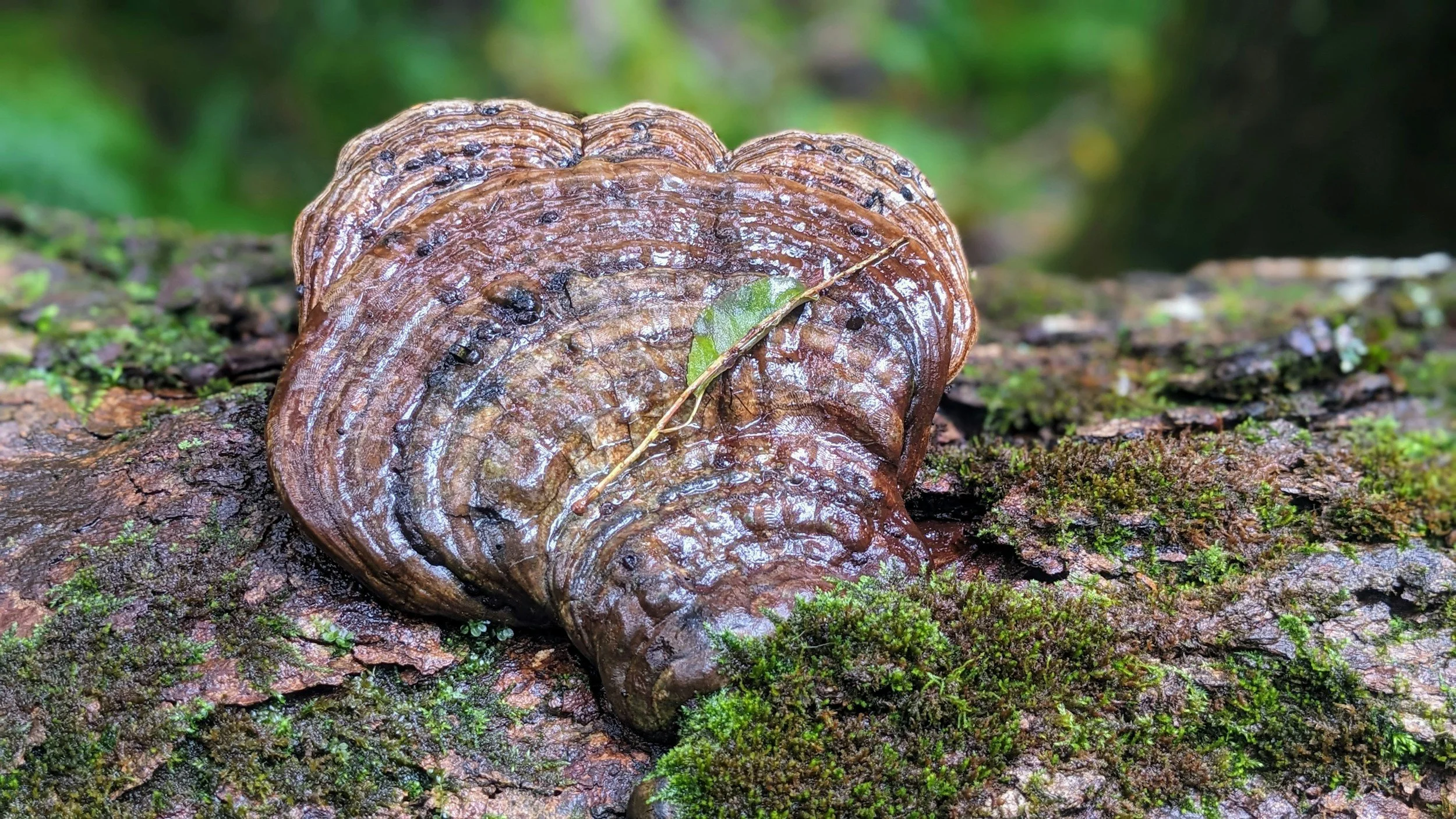
Image here of Reishi in the wild, though most herb for clinical use is grown in highly controlled inside or greenhouse operations.
“It's not what happens to you, but how you react to it that matters"—Epictetus
Beyond the Herb Bottle: Adaptive Practices
Adaptation isn't only about what herbs or adaptogens we take. We can't always change our circumstances, but we can change our reactions and adapt our choices. Doing hard things, splashing cold water on the face, and breathing through discomfort all build resilience. So do surfing, jiu-jitsu, lifting weights, going new places, and challenging ourselves in safe ways, which helps us be brave when real challenges arrive.
Gargling, humming, and singing help tone the vagus nerve. Better vagal tone increases the body's capacity to pivot smoothly from stress or anxiety back to calm balance. Meditation and visualization give us tools to call upon, whether the challenge is unexpected or expected. Acupuncture and regular nervous system tending belong here too. These are all valuable tools to help us cultivate a more adaptive state.
Contraindications and Cautions
Adaptogens are not a panacea, and they are not for everyone. They are best used in recovery or in preparation for a challenge, which can simply be daily life in some seasons: parenting, caring for aging parents, school, exams, marathons. They are not meant for acute infection or crisis.
Ashwagandha: Use caution with autoimmune conditions or Hashimoto's, since it can prompt an immune response. Avoid combining it with sedatives (it may enhance their effects and cause extreme drowsiness), thyroid medications, diabetes drugs, immunosuppressants (it stimulates the immune system), and blood pressure medications (it lowers blood pressure and may cause it to drop too low).
Ginseng: There is a condition called ginseng abuse syndrome, related to overuse of panax ginseng as a stimulant and panax ginseng should not be combined also with caffeine. I do have one patient who has found Siberian Ginseng can worsen certain her autoimmune conditions, so it’s worth noting and paying attention to any changes in immune response or symptoms when starting any new medications, including herbs and herbal formulas.
Schisandra: Avoid it during acute bacterial or viral infections, when the body doesn't need a tonic.
Shilajit: Avoid it if you are already high in iron or have red blood cell diseases such as sickle cell, because of the risk of iron accumulation. It may lower blood pressure, which isn't desirable if yours is already low. It isn't recommended for people with gout or high uric acid, and it may interfere with diabetes medication, blood pressure medication, or testosterone supplementation.
Eleuthero, holy basil, and reishi: Because they may lower blood sugar or influence the immune system, talk with your clinician if you take diabetes medication or have an autoimmune-related condition.
Choosing the right adaptogen, and the right time for it, is individual. Which one fits you may even depend on season and temperament, time of year and what else is going on in your life at this time.
| Herb | Calming ↔ Energizing | Immune Impact | Brain & Mood | Key Caution |
|---|---|---|---|---|
| Ashwagandha | Calming | Stimulating | Calm, sleep, endurance | Autoimmune/thyroid conditions; many medication interactions |
| Eleuthero | Balanced to mildly energizing | Balancing (stimulates or calms as needed) | Memory, focus, cognitive and mental endurance (possibly via BDNF) | May lower blood sugar; check with your clinician if you have diabetes or immune conditions |
| Holy basil (tulsi) | Gently calming | Balancing (re-regulates overactive responses) | Mental fog, reaction time, stress and anxiety | May lower blood sugar and blood pressure |
| Maca | Gently energizing (vitality, not a "buzz") | Minimal | Mood, clearer thinking, sleep in perimenopause | Hormone-sensitive conditions: check with your clinician |
| Panax ginseng | Energizing (the most stimulating) | Stimulating (supports the response to infection) | Resilience, fatigue reduction, balanced stress response via the HPA axis | Can aggravate some people and certain autoimmune conditions; may improve insulin sensitivity, so check diabetes medications |
| Reishi | Calming (non-drowsy) | Balancing | Sleep onset and quality, stress response | May lower blood sugar; ask your clinician if you take blood thinners or have an immune condition |
| Rhodiola | Energizing | Minimal | Alertness, memory, fatigue | Mild stimulant, so be mindful with other stimulants |
| Schisandra | Calming with mental clarity | Minimal | Clarity, reflexes, anxiety, restless sleep | Avoid in acute infection |
| Shilajit | Energizing (cellular energy, not a "buzz") | Minimal | Vitality and recovery from prolonged stress | Iron overload, sickle cell, gout, low blood pressure; medication interactions |
| Lavender (not an adaptogen) | Calming | Minimal | Uplift, anxiety, sleep | Few contraindications |
For educational purposes only; not medical advice. Please consult your healthcare provider before starting any herb or supplement.
An Invitation
Life will always ask something of us, and we can't always change the circumstances. What we can do is build our reserves, tend our nervous systems, and choose how we meet and react to each challenge. Adaptogens, along with the practices that help us adapt, are key tools in today's busy modern world. Whether you're drawn to the steady calm of reishi, the gentle uplift of holy basil, or a few deep breaths and a splash of cold water on the face, I invite you to explore with curiosity and a spirit of play. These herbs are allies, not quick fixes, and they work best when they fit you, your body, your medications, and your season of life. That is why I encourage you to schedule a visit with me or another trusted provider, so we can sort out which herbal allies are right for you and when. You don't have to keep running on empty. Together, we can help you rest well, adapt with grace, and find your way feeling a little easier and lighter.
This post is for educational purposes only and is not medical advice. Please talk with your own healthcare provider before starting any herb or supplement, especially if you take medication, are pregnant or nursing, or have a chronic condition.
References used:
Bone K, Mills S. Principles and Practice of Phytotherapy: Modern Herbal Medicine. 2nd ed. Churchill Livingstone/Elsevier; 2013.
Meissner HO, Reich-Bilinska H, Mscisz A, Kedzia B. Therapeutic effects of pre-gelatinized maca (Lepidium peruvianumChacon) used as a non-hormonal alternative to HRT in perimenopausal women: clinical pilot study. Int J Biomed Sci. 2006;2(2):143-159. PMID: 23674976; PMCID: PMC3614596.
Panossian A, Wagner H. Stimulating effect of adaptogens: an overview with particular reference to their efficacy following single dose administration. Phytother Res. 2005;19(10):819-838. doi:10.1002/ptr.1751
Stamets, Paul All about reishi "the mushroom of immortality" (Ganoderma lucidum). Fungi.com. Published February 14, 2025. Accessed October 2, 2026. https://fungi.com/blogs/articles/all-about-reishi-the-mushroom-of-immortality-ganoderma-lucidum
Tilgner S. Herbal Medicine from the Heart of the Earth. Wise Acres Press; 1999
Ulloa del Carpio N, Alvarado-Corella D, Quiñones-Laveriano DM, et al. Exploring the chemical and pharmacological variability of Lepidium meyenii: a comprehensive review of the effects of maca. Front Pharmacol. 2024;15:1360422. doi:10.3389/fphar.2024.1360422
Winston D, Maimes S. Adaptogens: Herbs for Strength, Stamina, and Stress Relief. Healing Arts Press; 2019

Always happy to share the tea with you,
& if you’d like your own custom adaptogen blend recommendation please be in touch!